Fractals in Mathematics and Design
Infinite Patterns, Finite Rules: How Fractals Shape Art, Nature, and Human Creativity
▶️ Rave the World Radio
24/7 electronic music streaming from around the globe
Fractals occupy a fascinating intersection between mathematics, art, design, nature, and technology. Their defining feature—self-similarity across scales—generates structures that look intricate, organic, and sometimes chaotic. Yet behind this complexity lie simple recursive rules, often just a few equations iterated repeatedly.

The term “fractal” was introduced by Benoit Mandelbrot in 1975. He derived it from the Latin fractus, meaning broken or irregular. This idea was revolutionary at the time: geometry was dominated by smooth shapes like circles, triangles, and cubes. Mandelbrot showed that the world is largely not smooth. Nature, instead, is full of irregular shapes: jagged coastlines, branching trees, lightning bolts, clouds, roots, rivers, and seashells. By formalizing a geometry capable of describing these shapes, fractal mathematics offered a new lens on the structure of reality.
Today, fractals are among the most visually striking and conceptually rich ideas in mathematics. They influence fields from physics and biology to architecture, digital art, cryptocurrency mining algorithms, and even psychotherapy metaphors. This essay explains fractals in their mathematical foundation and explores how they inspire the world of design.
Classic Fractals with JS and HTML by Luka Jagor1. What Exactly Is a Fractal?
A fractal is a mathematical set or object with at least one of the following properties:
1. Self-Similarity
The shape repeats itself across different scales. Zooming in reveals smaller versions of the whole. This may be:
-
Exact self-similarity (Sierpiński triangle)
-
Quasi-self-similarity (Mandelbrot set)
-
Statistical self-similarity (coastlines, clouds)
2. Fractional Dimension
Traditional geometry assigns integer dimensions: 1D lines, 2D squares, 3D cubes.
Fractals often occupy non-integer dimensions, such as 1.585 or 2.727. These numbers quantify “how much space” the fractal fills.
3. Recursive Generation
Many fractals emerge by applying rules repeatedly—an idea central to computing and algorithmic art.
4. Infinite Complexity
No matter how much you zoom in, a fractal reveals further detail. This gives fractals an almost alive, breathing quality.
Because fractals capture complexity through simplicity, they bridge the gap between raw mathematics and naturally occurring phenomena.
2. Mathematical Foundations of Fractals
2.1 Iteration and Recursion
Fractals often rely on functions applied repeatedly. In simplest form:
Start with an initial value
Apply a function
Use the output as the next input
Repeat indefinitely
This is how the Mandelbrot and Julia sets operate. The rule is simple:
zₙ₊₁ = zₙ² + c
Yet the results, visualized in the complex plane, are dazzlingly intricate.
2.2 Fractal Dimension
The dimension of a fractal tells us how it scales. For example:
-
A straight line has dimension 1
-
A plane has dimension 2
But the Koch snowflake has a dimension of roughly 1.26, meaning it is more than a line but less than a plane.
The Menger sponge has a dimension of 2.727, filling more space than a surface but less than a solid cube.
2.3 Chaos Theory
Fractals are often tied to chaotic systems, where small changes create big differences.
Chaotic does not mean random—it means sensitive to initial conditions.
This connection makes fractals useful for modeling complex systems such as weather, turbulent flow, and population dynamics.
3. Classic Mathematical Fractals
Many foundational fractals were identified long before computers. Others became accessible only through modern computation. Your uploaded document lists many such classics, several of which are summarized below .
3.1 Mandelbrot Set
Discovered by Benoit Mandelbrot in 1980, it is arguably the most famous fractal. Defined as all complex numbers c for which the iteration z → z² + c remains bounded, its boundary contains infinite complexity and endless sub-structures (“baby Mandelbrots,” spirals, seahorses).
3.2 Julia Sets
Closely related to the Mandelbrot set, Julia sets arise when the parameter c is fixed and z varies. Some Julia sets are connected, others are dust-like, and each parameter reveals an entirely new world.
3.3 Sierpiński Triangle and Carpet
Created by repeatedly removing central shapes, these exact self-similar fractals have clean mathematical rules yet produce lace-like patterns that inspire graphic design and architecture.
3.4 Koch Snowflake
Made by recursively adding bumps to each line segment, the Koch snowflake has infinite perimeter but finite area—an idea that challenges geometric intuition.
3.5 Cantor Set
Sometimes called “Cantor dust,” this fractal consists of endlessly removing middle segments from a line. It has uncountably many points yet total length zero.
3.6 Menger Sponge
A 3D analogue of the Sierpiński carpet, this sponge has infinite surface area but zero volume. Its porous form resembles certain cellular structures and mathematical models of porous materials.
3.7 Barnsley Fern
Using simple transformation rules, this fractal produces a realistic fern shape, showing that iterated function systems can mimic nature with startling accuracy.
3.8 Dragon Curve, Lévy C Curve, Tricorn, Burning Ship
These fractals, each with their own mathematical rules, feature sharp turns, recursive angles, and abstract organic shapes. The Burning Ship fractal, for instance, resembles a flaming vessel rising from the sea.
Together, these fractals form a “hall of fame” of mathematical beauty.
🌈 What Is Gradient Design?
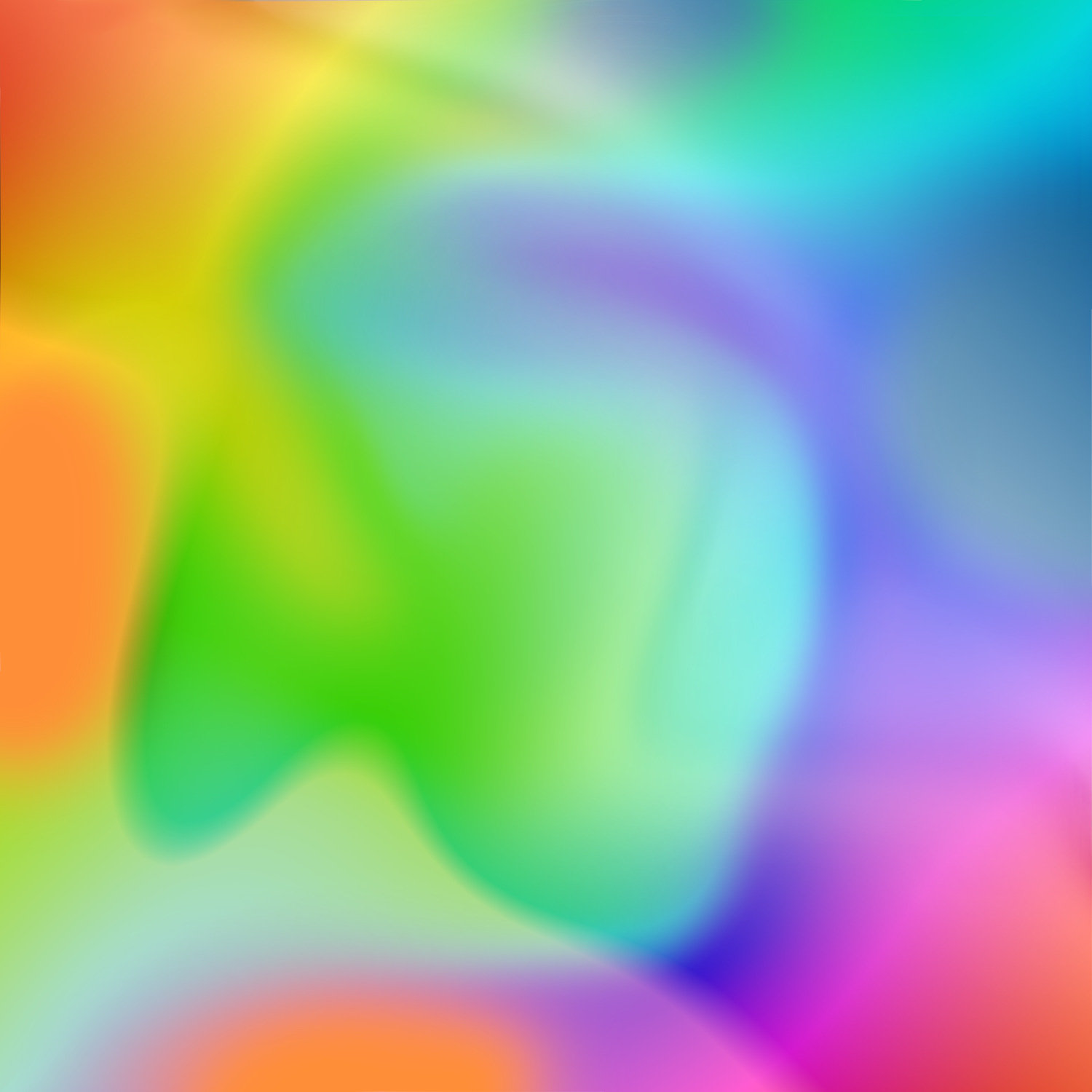
Gradient design is diffrent, it's the art of blending two or more colors so they transition smoothly across a surface. Instead of using a single flat color, gradients create depth, atmosphere, and motion — all through color flow.
In digital design, gradients are made by interpolating values between colors, creating a continuous shift in hue, brightness, or saturation. Today’s gradients are far more expressive than the old-school “PowerPoint gradients”; they’re rich, cinematic, and often inspired by lighting, photography, and nature.

🎨 Why Designers Love Gradients
1. They Add Emotional Tone
Every gradient carries a mood:
-
Soft pastel blends → calm, dreamy
-
Bold neon fades → energetic, futuristic
-
Warm amber transitions → cozy, human
They turn abstract color theory into feeling.
2. They Create Depth
A flat color is like a clean sheet of paper.
A gradient is like light falling across a surface.
Designers use gradients to mimic:
-
atmospheric haze
-
sunrise lighting
-
liquid or glass reflections
-
3D surfaces
Gradients are essentially “light simulations” for 2D design.
3. They Modernize Any Layout
Contemporary visual culture loves gradients: Spotify, Instagram, Adobe, Figma, YouTube Music — almost every modern app uses gradients to look alive rather than static.
Gradients feel digital, alive, and dynamic.
🔥 Types of Gradients (Quick Guide)
1. Linear Gradient
Colors blend in a straight line.
Perfect for backgrounds, banners, and dividers.
2. Radial Gradient
Colors radiate from a center point outward.
Adds spotlight-like focus.
3. Angular / Conic Gradient
Colors sweep around a circle.
Cinematic, sci-fi, or “liquid metal” feel.
4. Multi-Stop Gradients
More than two colors — smooth palettes or psychedelic storms.
5. Mesh Gradient
The next generation: organic, cloud-like color fields.
Feels like liquid light or atmospheric fog.
✨ Good Gradient = Thoughtful Color Flow
A beautiful gradient isn’t random.
It works because of:
✔ Color Harmony
Use colors that share hue temperature or brightness.
✔ Smooth Contrast
Don’t let one color suddenly overpower another.
✔ Purpose
Every gradient should answer: What mood am I creating?
Gradients are storytelling tools.
🧪 Cool Tip: How to Use Gradients in Your Blog Aesthetic
Here are modern-specific styling ideas:
-
Use a soft vertical gradient as your blog background for a subtle ambient glow.
-
Add gradient overlays on images for dreamy visuals.
-
Use gradient borders or text highlights to make sections shine.
-
Try mesh gradients if your theme supports custom backgrounds.
-
Use gradients as a signature: every post can share a familiar color flow.
Readers respond incredibly well to color atmospheres — your gradient choices can become part of your personal brand.
🌀 Gradient = Mood + Light + Motion
If flat colors feel like silence, gradients feel like music.
That’s why they work so well in digital art, UI design, photography overlays, vaporwave, synthwave, cyber aesthetics, climate art, and emotional storytelling.
Designers use gradients because they don’t just look good — they feel good.
4. Fractals in the Natural World
Fractals exist naturally in countless structures. The world is rarely smooth—it is fractally rough. Examples include:
4.1 Trees and Roots
Branches divide into smaller branches that resemble the whole tree. Roots mirror this pattern underground.
4.2 Coastlines
Lewis Fry Richardson discovered that measuring a coastline yields different lengths depending on the scale of measurement—an early insight that led Mandelbrot to formalize fractal geometry.
4.3 Clouds and Mountains
Irregular structures exhibit statistical self-similarity that can be simulated using fractal noise algorithms such as Perlin noise or the diamond-square algorithm.
4.4 Snowflakes
The multi-armed crystalline patterns of snowflakes are fractal in nature, each repetition governed by thermodynamic conditions.
4.5 Human Physiology
Examples include:
-
Bronchial tree of the lungs (branching airways)
-
Blood vessels (artery → arterioles → capillaries)
-
Neural dendrites
-
DNA folding patterns
-
Retinal blood vessel branching
4.6 Lightning and Rivers
Electrical discharge and water flow both follow fractal branching structures to seek efficient pathways.
Nature prefers fractals because they optimize:
-
Energy distribution
-
Resource diffusion
-
Structural stability
-
Surface area coverage
This natural efficiency makes fractals crucial inspiration for designers and engineers.
5. Fractals in Art and Digital Visualization
Fractal art became mainstream with personal computers. Artists began exploring:
5.1 Escape-Time Fractals
Generated using formulas and coloring algorithms (e.g., Mandelbrot, Julia).
Artists choose color schemes, iteration limits, and zoom levels to explore unique visuals.
5.2 Iterated Function Systems for Realism
Trees, leaves, ferns, feathers, and organic forms can be created using transformation rules.
The Barnsley Fern is the iconic example.
5.3 L-System Art
Lindenmayer systems (L-systems) produce branching structures—ideal for plants, coral, and intricate patterns.
5.4 Fractal Flames
Developed by Scott Draves, these produce swirling, luminous patterns seen in many modern digital artworks.
5.5 Procedural Textures
Fractal noise is used in CGI for clouds, fire, smoke, mountains, ocean waves, and terrain modeling.
Fractals have become foundational in video games, animation, and simulation.
6. Fractals in Design, Architecture, and Urban Planning
Because fractals balance order and complexity, they are ideal for design work in both structural and aesthetic domains.
6.1 Architectural Inspirations
Architects have used fractals to create visually engaging and structurally efficient buildings. Examples include:
-
Islamic architecture (geometrically repeating patterns)
-
Gothic cathedrals (recursive ornamentation)
-
Frank Lloyd Wright’s modular designs
-
Digital parametric architecture guided by algorithmic rules
Fractal design principles help balance symmetry with uniqueness.
6.2 Urban Layouts
Fractal geometry describes how cities naturally grow:
-
Main roads → secondary roads → side streets
-
City centers → districts → neighborhoods → blocks
Studies show that walkable, human-friendly cities often exhibit fractal patterns.
6.3 Product and Interface Design
Fractal arrangements appear in:
-
Logo designs
-
Pattern textiles
-
Repeating motifs in graphic design
-
App interfaces with hierarchical menus
-
Fractal-inspired icons and animations
Designers use fractals to create visual depth, layering, and organic flow.
7. Computational Fractals and Algorithmic Design
The marriage of fractals and computing is one of the most productive relationships in digital creativity.
7.1 Procedural Generation
Fractals drive world-building in:
-
Video games (Minecraft, No Man’s Sky)
-
Film CGI (Lord of the Rings mountains, Interstellar wormholes)
-
Digital simulations
Fractal noise creates believable landscapes without hand-modeling every detail.
7.2 Data Compression
Fractal compression uses self-similarity to encode images efficiently. Though less common today, it inspired many modern texture compression algorithms.
7.3 Signal and Network Analysis
Fractals help in:
-
Analyzing network traffic patterns
-
Modeling telecommunications antennas
-
Detecting patterns in financial markets
Fractal antennas, for example, allow wideband frequency resonance in compact area.
7.4 Machine Learning and Fractals
Machine learning models sometimes visualize loss landscapes that resemble fractals.
Generative AI has also been used to produce fractal-like artworks.
8. Emotional and Psychological Dimensions of Fractals
Fractals have psychological impact:
8.1 Biophilic Patterns
Human brains evolved in nature; fractal patterns soothe and reduce stress.
Studies show mid-range fractal complexity improves focus and relaxation.
8.2 Meditative and Spiritual Art
Fractals provide endless depth and symmetry, similar to mandalas.
Their infinite zoom can evoke transcendence or introspection.
8.3 Therapeutic Visualizations
Some therapists use fractal art to help patients explore emotions or regulate anxiety.
9. Future Directions: Fractals in Technology and Society
The future promises deeper integration between fractals and:
9.1 Bioengineering
Understanding fractal branching could help design artificial lungs, vasculature networks, and tissue scaffolds.
9.2 Environmental Modeling
Fractal algorithms model climate, erosion, atmospheric motion, and ecological spread.
9.3 Space Exploration
Fractal analysis helps interpret astronomical phenomena: galaxy distribution, solar flare patterns, planetary terrains, and asteroid surfaces.
9.4 Quantum Computing
Some fractal structures appear in quantum wave functions and simulations of quasicrystals.
9.5 Algorithmic Art Renaissance
AI combined with fractal mathematics may create new digital art movements.
Fractal thinking—seeing complexity through simple rules—will remain vital to design, science, and creativity.
Conclusion
Fractals are more than mathematical curiosities. They capture the structure of nature, inspire groundbreaking design, guide digital worlds, influence architecture, and shape technology. Fractal geometry shows that simplicity can generate spectacular complexity, and that order and chaos intertwine harmoniously. For designers, mathematicians, artists, and scientists alike, fractals represent an infinite playground of structure, meaning, and beauty.
Understanding fractals isn’t just learning a mathematical concept—it’s learning a worldview. One where patterns repeat across scales, where nature reveals order in apparent chaos, and where creativity emerges from the simplest rules imaginable.
In this balance of structure and imagination, fractals remain one of the most profound ideas bridging mathematics and design.
References
-
Gefen, A., Meakin, P., & others. Texts on fractal dimensions and scaling laws.
-
Your uploaded document: Some of the Most Famous and Important Fractals in Mathematics (summarized)
-
Peitgen, H.-O., Jürgens, H., Saupe, D. Chaos and Fractals: New Frontiers of Science.
-
Richardson, L. F. The Problem of Contiguity: An Approach to the Question of the Measurement of Geographical Lines.
-
Mandelbrot, B. How Long Is the Coast of Britain? Statistical Self-Similarity and Fractional Dimension.

Comments
Post a Comment