My Italy Trip: A Journey Through Ancient Wonders, Hidden Adriatic Treasures, Industrial Heritage, and the Timeless Spirit of Italian Life
From the Eternal City of Rome to the Velvet Beach of Senigallia—discovering history, engineering, seaside beauty, and unforgettable moments across central Italy.
▶️ Rave the World Radio
24/7 electronic music streaming from around the globe
This travel narrative chronicles a comprehensive journey across central Italy, blending personal reflections with observations on history, infrastructure, and local culture. The author details experiences in major hubs like Rome and Perugia, highlighting the seamless integration of modern transportation technology within ancient urban landscapes. Beyond famous landmarks, the text emphasizes the value of slow travel by exploring hidden gems in the Le Marche region, such as the industrial beauty of Ancona and the quiet charm of Jesi. The account culminates in a deep appreciation for the coastal town of Senigallia, celebrated for its tranquil atmosphere and "velvet" beaches. Ultimately, the source serves as an evocative guide that encourages finding unexpected beauty in both functional engineering and spontaneous discovery.
- Arriving in Italy
- Rome: Where History Lives Beside Everyday Life
- Rome's Public Transportation: Surprisingly Easy to Navigate
- Perugia: A Hilltop City with Modern Ingenuity
- Ancona: Where Industry Meets Unexpected Beauty
- The Adriatic Coast Beckons
- Senigallia: The Place That Captured My Heart
- Reflections on an Unforgettable Journey
- References
Italy has always occupied a special place in my imagination. Long before I boarded the ferry that would carry me across the Adriatic Sea, I pictured lively piazzas, Roman ruins, colourful streets, delicious cuisine, and the relaxed rhythm of everyday Italian life. Yet no amount of photographs or travel documentaries could fully prepare me for experiencing the country firsthand. My journey became much more than a holiday—it evolved into an exploration of history, architecture, engineering, coastal landscapes, and countless memorable encounters that revealed Italy's remarkable diversity.
Unlike many trips that revolve around ticking famous landmarks off a list, this journey encouraged me to slow down. Some of my favourite discoveries happened entirely by accident while wandering unfamiliar streets, following an interesting skyline, or taking a different route simply because curiosity pointed me in that direction. Those spontaneous moments transformed ordinary walks into unforgettable adventures.
The route itself connected several fascinating destinations. Beginning with Rome, continuing through the medieval hills of Perugia, passing charming towns in Le Marche such as Jesi and Ancona, and ultimately arriving at the beautiful Adriatic resort of Senigallia, every destination contributed its own personality to the journey. Together they painted a vivid picture of central Italy—a region where thousands of years of history exist comfortably alongside modern transportation, contemporary engineering, and vibrant local communities.
Arriving in Italy
Crossing the Adriatic Sea already felt like an important part of the adventure rather than merely transportation between two countries. Watching the coastline gradually appear on the horizon created an unmistakable sense of anticipation. Italy slowly emerged from the morning light, promising days filled with discovery.
Travelling by ferry offered a unique perspective. Unlike flying, which compresses geography into a matter of hours, travelling across the sea provides a gradual transition between countries. The changing colours of the water, the fresh Mediterranean air, and the growing outline of the Italian coastline made the arrival feel ceremonial.
It was impossible not to think about the countless merchants, sailors, explorers, and travellers who had crossed these waters over thousands of years. The Adriatic has connected cultures since ancient Roman times, serving as one of Europe's great maritime highways. Becoming part of that long tradition—even briefly—gave the journey an unexpected historical dimension.
Stepping onto Italian soil brought an immediate change in atmosphere. The language, architecture, road signs, cafés, and pace of life combined to create an unmistakable sense of place. Italy possesses an extraordinary ability to make everyday surroundings feel cinematic.
Rome: Where History Lives Beside Everyday Life
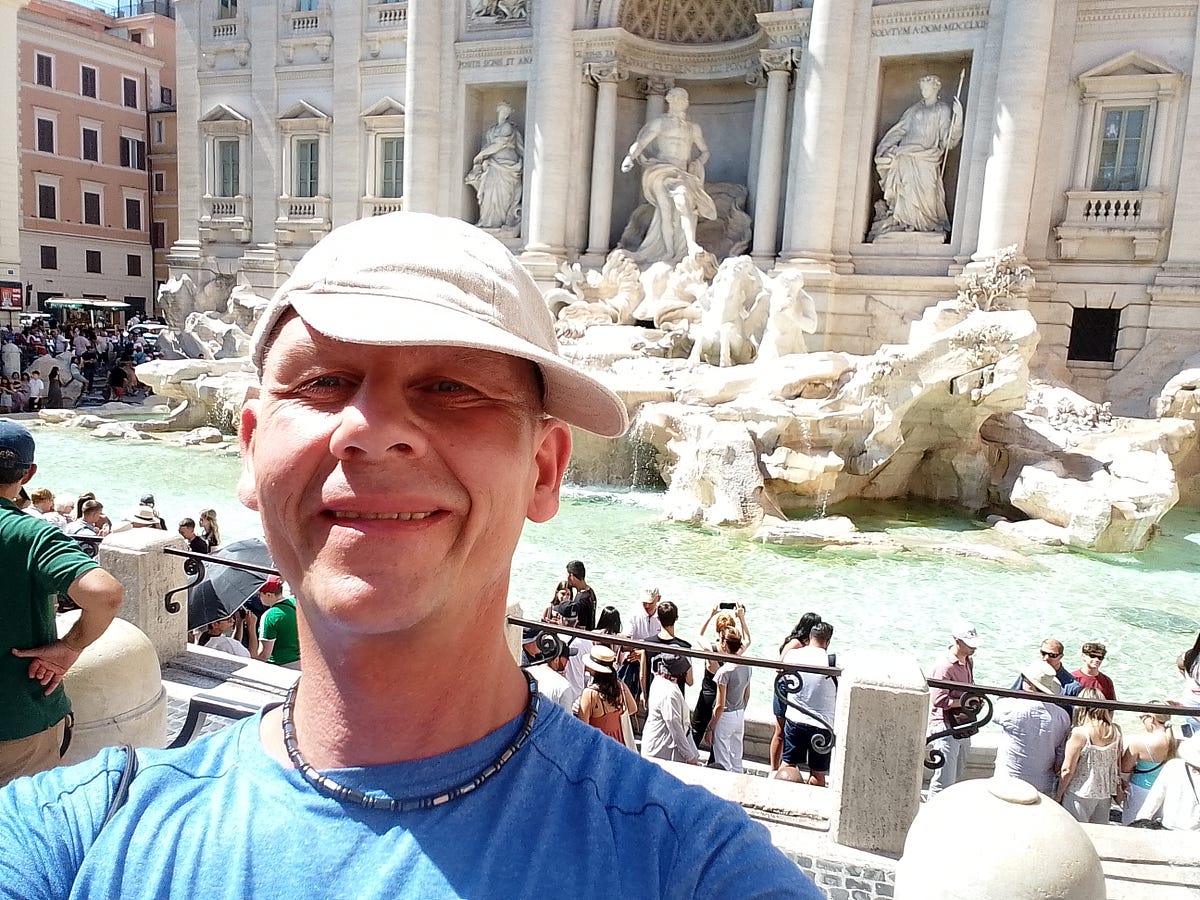
No first visit to Italy feels complete without experiencing Rome. The Eternal City presents an extraordinary contrast between antiquity and modern life. Ancient monuments rise beside busy streets, centuries-old churches stand next to fashionable boutiques, and quiet neighbourhood cafés exist only minutes away from world-famous archaeological sites.
Walking through Rome often felt like travelling through multiple centuries within a single afternoon. One moment I admired elegant Renaissance buildings; the next I found myself standing near structures whose origins stretched back nearly two thousand years. The city never feels like an open-air museum frozen in time. Instead, history continues to function as an active part of daily life.
Romans walk, work, study, shop, and socialise among monuments that millions of visitors travel across the world to see. This coexistence between everyday routines and extraordinary historical heritage creates an atmosphere unlike anywhere else.
The city's architecture rewards careful observation. Decorative balconies overflow with flowers, narrow streets suddenly reveal hidden courtyards, and impressive churches often conceal masterpieces behind relatively modest façades. Even without entering every attraction, simply wandering through the city becomes an education in European history, urban planning, and artistic achievement.
Every district possesses its own character. Some streets buzz with tourists and street musicians, while others remain surprisingly peaceful despite being only a few minutes away from famous landmarks. These quieter areas often became my favourite places to pause, observe local life, and appreciate Rome beyond its postcard images.
Rome's Public Transportation: Surprisingly Easy to Navigate
One of the biggest positive surprises during my visit was Rome's public transportation system. Before travelling, I expected navigating such a large capital city to be confusing and occasionally stressful. Instead, I found it remarkably practical, especially when combined with Google Maps.
Whether travelling by metro, bus, tram, or regional train, planning each journey was straightforward. Google Maps consistently provided reliable route suggestions, accurate departure times, and clear information about transfers. In most cases, the buses and trains arrived very close to the published schedule, making it easy to organise sightseeing without constantly worrying about missing connections.
Perhaps the most impressive aspect was how simple it became to identify the correct stop or station. Large transport hubs can often feel overwhelming for first-time visitors, but digital navigation removed much of that uncertainty. The application clearly indicated whether the correct platform was directly opposite, across the street, around the corner, or a short walk away. Instead of second-guessing every decision, I could focus on enjoying the city itself.
This seamless integration between Rome's transport network and modern navigation technology transformed what might have been a challenging experience into one of the easiest aspects of the trip. It demonstrated that even one of Europe's oldest capitals can embrace digital tools that make independent travel comfortable, efficient, and surprisingly relaxing.
Perugia: A Hilltop City with Modern Ingenuity
Leaving Rome behind, the journey continued toward Perugia, the capital of Umbria. Rising dramatically above the surrounding countryside, the city immediately impressed me with its commanding views and distinctive medieval skyline. Built upon steep hills, Perugia demonstrates how centuries of history can successfully coexist with innovative modern infrastructure.
The historic centre feels wonderfully preserved. Narrow stone streets weave between elegant palaces, churches, cafés, and lively public squares. Every climb rewards visitors with another panoramic viewpoint overlooking the rolling Umbrian landscape. Although the hills present a physical challenge, they also contribute greatly to the city's unique charm.
 |
 |
What fascinated me most, however, was not only Perugia's remarkable history but also its clever transportation solution: the Minimetrò. This automated people-mover elegantly connects lower districts with the historic centre, helping reduce traffic while making the city far more accessible for both residents and visitors. The elevated red guideway curves gracefully through the urban landscape, becoming an architectural feature in its own right rather than simply a piece of infrastructure.
Watching the small driverless cabins glide quietly along their route demonstrated how thoughtful engineering can respect a city's historical character instead of competing with it. It was an excellent example of how modern technology can solve practical problems while preserving cultural heritage.
Jesi: A Hidden Gem in the Heart of Le Marche
From the hills of Umbria, my journey continued east into the beautiful region of Le Marche, an area that often receives far less international attention than Tuscany or the Amalfi Coast. Yet this relative obscurity is precisely what makes it so rewarding. Here, authentic Italian life unfolds at its own comfortable pace, away from the crowds that gather around the country's most famous attractions.
One of the memorable stops was the charming town of Jesi. Surrounded by rolling hills, vineyards, and fertile countryside, Jesi immediately impressed me with its elegant blend of medieval and Renaissance architecture. Walking through its historic centre felt peaceful and unhurried, offering an opportunity to appreciate Italy's smaller cities, where daily life continues much as it has for generations.
The narrow streets invited exploration. Warm sunlight reflected from centuries-old stone buildings, while flower-filled balconies added colour to quiet residential lanes. Every corner seemed carefully preserved without feeling artificial or overly commercial. Instead of overwhelming visitors with grand monuments, Jesi revealed its beauty gradually through intimate squares, welcoming cafés, and beautifully maintained architecture.
These quieter destinations often leave the strongest impressions because they allow travellers to slow down. Without rushing between famous landmarks, I found myself paying greater attention to details—the texture of old brickwork, the sound of conversations drifting from cafés, and the relaxed rhythm of local life. It reminded me that travel is not always about seeing the biggest attractions; sometimes it is simply about appreciating the atmosphere of a place.
Ancona: Where Industry Meets Unexpected Beauty
My next destination, Ancona, presented an entirely different character. As one of Italy's most important Adriatic ports, the city combines maritime history with modern transportation, busy commercial activity, and impressive engineering infrastructure. At first glance, some visitors may overlook its industrial districts, focusing instead on more traditional tourist attractions. However, I discovered that these overlooked areas possess their own unique visual appeal.
Near the railway station and port, one structure immediately captured my attention—a tall tower distinguished by its striking red-and-white checkered upper section. Standing prominently against the blue sky, surrounded by railway lines, roads, and urban infrastructure, it became an irresistible photographic subject. Rather than simply taking a quick picture and moving on, I spent several hours exploring the surrounding neighbourhood from different angles.
I walked beneath railway bridges, along nearby streets, and across various viewpoints in search of the perfect composition. The tower almost became a travelling companion, always visible somewhere above the surrounding buildings and serving as an unexpected landmark whenever I changed direction. Ironically, what began as an attempt to photograph a single industrial structure evolved into one of the most enjoyable urban walks of the entire journey.
The tower is most likely a water tower or an industrial chimney connected to Ancona's railway or port facilities. Regardless of its precise function, its bold geometric pattern transforms a purely functional structure into something visually memorable. It demonstrates that industrial architecture can possess its own artistic qualities when viewed with curiosity rather than dismissed as merely utilitarian.
Later, I learned that a remarkably similar red-and-white checkered chimney exists at the district heating plant in Dessau-Roßlau, Germany. Although separated by hundreds of kilometres, both structures employ the same striking visual language, illustrating how engineering solutions sometimes transcend national borders while creating unexpected artistic connections across Europe.
Experiences like this reinforced one of the central lessons of my trip: remarkable discoveries are not limited to famous monuments or historic landmarks. Beauty often appears in unexpected places for those willing to explore beyond conventional tourist routes.
The Adriatic Coast Beckons
Leaving Ancona behind, the landscape gradually opened toward the Adriatic Sea. The atmosphere changed almost immediately. The pace became slower, the air carried the distinctive scent of saltwater, and the horizon expanded into endless shades of blue.
There is something profoundly calming about approaching the coast. After exploring historic cities filled with architectural treasures, the simplicity of the sea offers a different kind of beauty—one based on light, openness, and natural rhythm. The Adriatic seemed almost perfectly tranquil, reflecting the summer sky with remarkable clarity.
As I travelled north along the coast, anticipation continued to build. My next destination would ultimately become not only my favourite place in Italy but also the location that best captured the spirit of the entire journey.
Senigallia: The Place That Captured My Heart
Of all the places I visited during my Italian adventure, Senigallia left the deepest impression on me.
Some destinations impress through sheer size or historical significance. Others become unforgettable because of how they make you feel. For me, Senigallia belonged firmly to the second category.
Known as La Spiaggia di Velluto—the Velvet Beach—the town immediately lived up to its reputation. The wide stretch of golden sand, the calm waters of the Adriatic Sea, and the relaxed atmosphere combined to create an environment that felt both welcoming and peaceful. Rather than overwhelming visitors with noise and crowds, Senigallia encouraged slowing down and simply enjoying the moment.
Walking along the beach during sunrise and later again in the evening became some of the most memorable moments of my trip. The changing colours of the sky reflected beautifully across the sea, creating scenes that seemed almost painterly. Soft shades of gold, orange, pink, and blue blended together while gentle waves quietly reached the shore.
Beyond its famous beach, Senigallia possesses an elegant historic centre filled with inviting piazzas, charming streets, and impressive architecture. The Rocca Roveresca fortress stands proudly as a reminder of the town's long history, while cafés and restaurants create an atmosphere that encourages visitors to linger rather than hurry.
Unlike many heavily visited coastal resorts, Senigallia felt authentic. Families enjoyed leisurely evenings together, cyclists travelled comfortably along the waterfront, and locals gathered in cafés as the day gradually turned into night. There was no sense of rushing from one attraction to another. Instead, life unfolded naturally, allowing visitors to become part of the town rather than merely observe it.
Perhaps that is why Senigallia affected me so strongly. It offered the perfect balance between history, nature, culture, and relaxation. Every walk revealed another beautiful view, whether overlooking the sea, passing colourful buildings, or discovering another quiet corner of the old town.
Looking back on the entire journey, Rome amazed me with its extraordinary history. Perugia impressed me with its ingenious transportation system and medieval charm. Jesi introduced me to the quieter side of Italy, while Ancona demonstrated that industrial architecture can possess surprising artistic beauty. Yet if someone asked me which destination I would most eagerly return to, my answer would be immediate.
Senigallia was, without question, the nicest place to be.
Its stunning scenery, peaceful atmosphere, welcoming character, and beautiful Adriatic coastline created an experience that remained with me long after I had returned home. It was not simply another stop along the itinerary—it became the emotional highlight of the entire adventure.
Reflections on an Unforgettable Journey
Travelling through Italy reminded me that the country's greatest strength lies in its remarkable diversity. Every destination offered something entirely different, yet together they formed a coherent story about history, innovation, culture, and everyday life.
This journey was never solely about visiting famous places. It was about discovering unexpected beauty in industrial landmarks, appreciating ingenious public transportation, wandering medieval streets without a fixed destination, and watching the Adriatic Sea change colour as the sun slowly crossed the sky.
Photography became more than simply documenting locations. Each image captured a moment of curiosity, exploration, and appreciation for the countless details that make travel meaningful. Sometimes the most memorable photographs were not those of internationally famous monuments, but of a quiet alley in Jesi, a striking checkered tower in Ancona, a sleek MiniMetro cabin gliding above Perugia, or the gentle waves rolling onto Senigallia's Velvet Beach.
Italy also reinforced the value of slow travel. Rather than racing between attractions, taking time to walk, observe, and occasionally get pleasantly lost revealed experiences that guidebooks rarely mention. The conversations, unexpected viewpoints, peaceful streets, and spontaneous discoveries became just as valuable as the destinations themselves.
As I looked back on my journey—from crossing the Adriatic, exploring the Eternal City, climbing the hills of Perugia, wandering through Le Marche, and finally relaxing beside the sea in Senigallia—I realised that the true souvenir was not something I could carry home in a suitcase. It was a collection of memories, impressions, and experiences that would continue to inspire future adventures.
Italy is a country that invites return visits. Every region tells its own story, every city offers another perspective, and every journey reveals new details that were impossible to notice before. My first trip was not an ending but the beginning of a lasting appreciation for one of Europe's most captivating destinations.
And if there is one place that I know I will return to, it is the beautiful Adriatic town of Senigallia—where golden beaches, gentle sea breezes, timeless architecture, and an atmosphere of genuine tranquillity came together to create the most unforgettable chapter of my Italian adventure.
References
The following references provide historical, geographical, architectural, and transportation context for the destinations featured in this travel essay. They complement the author's personal observations and experiences throughout the journey.
Books & Travel Resources
-
Lonely Planet Italy (Latest Edition)
-
DK Eyewitness Italy
-
Rick Steves Italy
-
Italian National Tourist Board (ENIT)
-
Regione Marche Tourism
-
Comune di Roma
-
Comune di Perugia
-
Comune di Ancona
-
Comune di Senigallia
Historical & Cultural Topics
-
History of Ancient Rome
-
Roman Forum and Imperial Rome
-
Renaissance Architecture in Central Italy
-
Medieval Hill Towns of Umbria
-
Adriatic Coast of Italy
-
Le Marche Regional Heritage
-
Industrial Architecture in Europe
-
Maritime History of the Adriatic Sea
Transportation
-
Rome Metro, Bus and Tram Network
-
Google Maps Navigation Services
-
Perugia Minimetrò Automated Transit System
-
Italian State Railways (Trenitalia)
-
Adriatic Ferry Connections
Photography & Personal Travel Notes
The observations throughout this essay are based on the author's own travel experiences, photography, exploration, and reflections while visiting: Rome, Perugia, Jesi, Ancona, Senigallia



Comments
Post a Comment