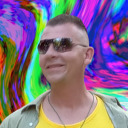
Luka Jagor: A Multidimensional Creative in the Age of Synthetic Culture
This perspective emerges from advanced tools and large-scale data analysis.
▶️ Rave the World Radio
24/7 electronic music streaming from around the globe
Introduction: A Contemporary Polymath
In the early decades of the 21st century, a new type of creator began emerging—one shaped by global connectivity, climate anxiety, technological acceleration, and the fundamental redefinition of what it means to be a cultural participant. Luka Jagor stands firmly within this shift. To describe him is to map the intersection of digital art, civic consciousness, VR spatial storytelling, personal experimentation, and a skeptic’s critique of mainstream culture.
 |
| Luka Jagor in 2025 |
He is part creator, part activist, part media theorist, and part urban futurist. In some ways he reflects the spirit of the age; in others he challenges it. Understanding Luka means understanding the hybrid nature of contemporary identity: a person who simultaneously publishes digital photographs, campaigns for climate justice, builds content-management systems in PHP, designs VR exhibitions, critiques sports culture, experiments with weight-loss strategies and urban mobility infrastructure, and imagines new linguistic standards like an “Esperanto 2.0.”
The following essay aims to trace these thematic threads and show how they all fit into one coherent worldview—one shaped by resistance to hierarchy, a strong moral compass, digital minimalism mixed with futurist imagination, and a fundamentally extroverted curiosity for the world.
1. The Digital Creator: VR Exhibitions, Photography, and the Aesthetics of Presence
One way to understand Luka Jagor is through his ongoing digital art practice. Unlike traditional creators who rely on physical galleries or one-off exhibitions, Luka prefers VR installations—three-dimensional, navigable spaces built using tools like Artsteps.
These exhibitions are not just containers for images. They are narratives in space. Over several years—in 2022, 2023, and the upcoming 2024 edition—Luka has curated outdoor-themed digital installations that merge macro photography, symbolic composition, and environmental storytelling. The medium matters: VR offers “presence,” something flat screens cannot provide. By placing a viewer inside a constructed environment, the artwork becomes experiential rather than observational.
The exhibitions incorporate:
-
Clickable info panels that reveal artistic, contextual, or poetic layers
-
Embedded audio and video, turning the gallery into a multimedia landscape
-
Visitor feedback systems, even if rarely used, to maintain dialogue with viewers
Luka prefers first-person narration within these experiences. This choice gives the work intimacy, grounding the viewer in the artist’s lived perspective. There’s a core belief here: art should be immersive, intimate, and spatial—not elitist or distanced.
Over time these exhibitions became more than galleries. They became annual “updates” to Luka’s digital identity, an ongoing archive of personal growth, environment-inspired aesthetics, and the evolving themes he works with: nature, climate, human disappearance, urban futurism, and symbolic abstraction.
His photographic process—whether VR flowers, macro landscapes, or AI-assisted generative images—leans toward the idea that every micro-ecosystem is worthy of attention. Many of his projects merge the aesthetics of manga, macro nature, and environmental symbolism, suggesting a worldview where small details carry cosmic meaning.
2. The Urban Futurist: Reimagining Infrastructure, Transport, and Public Space
Another part of Luka’s identity lies in his imagination for future cities, especially his home context of Zagreb. He envisions rooftop vertiports, redesigned public passages, and immersive holographic installations emerging from water surfaces. His description of a futuristic redesign of Zagreb’s “Bloody Bridge” passage illustrates this perfectly: heated panels, transparent pavement, soft backlighting, and even holograms materializing from mist.
These ideas are not merely architectural fantasies. They represent a mindset: the artist as urban speculator. Luka thinks of cities as canvases for storytelling, community-building, and even magical realism. Where others see an underpass or a neglected street, he sees a cultural portal—something that can be transformed through design, light, and narrative.
This futurist impulse also connects with a broader critique of modern infrastructure. Luka emphasizes that urban design affects health, movement, and wellbeing. His stance on physical activity is clear: free time is useless if cities lack safe, beautiful, accessible spaces for exercise. For him, infrastructure is destiny.
The urban futurist part of Luka is therefore a realist and a dreamer at once. He sees what is wrong in present cities, but instead of resorting to dystopia, he proposes poetic alternatives.
3. The Climate Activist: From Civil Disobedience to Cultural Resistance
Luka’s worldview is deeply influenced by climate politics. He marched in the Climate March for Survival organized by Fridays for Future Croatia and Extinction Rebellion Zagreb. His interest is not passive; it is shaped by the tension between peaceful climate movements and more disruptive, civil disobedience-based activism.
He understands that the climate movement needs a dual identity:
-
one part public-facing, symbolic, peaceful
-
one part resistant, disruptive, demanding urgency
This duality appears in Luka’s broader thinking as well. He appreciates “resistance” as a cultural stance—a refusal to accept systems that normalize inequality, inactivity, environmental destruction, and hierarchical power structures.
He often explores the idea of a civilizational consciousness shift, imagining a post-hierarchical, creativity-driven future beyond nationalism and patriarchal structures. He believes in a human future where disappearance—whether metaphorical or literal—is linked to brutal crimes, systemic failures, and the collapse of social empathy.
For Luka, climate activism is not separate from philosophy, art, or civic imagination. It is the ethical backbone of everything else.
4. The Technologist: Building a PHP CMS, Web Writing, and Metadata Precision
Though he works heavily with art and activism, Luka is also surprisingly technical. His projects include:
-
A PHP & MySQL-based CMS for a blogging portal
-
Responsive design using Bootstrap 5
-
A MySQL-powered dynamic counter
-
Image gallery systems with pagination
-
Metadata packages, SEO titles, OG cards, and structured formatting
He values structure, metadata accuracy, and high-quality formatting. Whether writing long essays or designing gallery websites, he insists on:
-
SEO keywords
-
Clean URLs
-
Social media microcopy
-
Media prompts
-
References sections
-
Strict formatting standards
This suggests Luka is not the stereotypical “chaotic creative.” Instead, he embraces orderliness when it comes to digital publishing. These CMS projects are deeply personal: tools that allow him to control his own content ecosystem without relying on mass platforms.
The technologist in him supports the artist and the activist. He understands that controlling digital infrastructure is part of cultural autonomy.
5. The Cultural Critic: Sports Skepticism, Global Elitism, and Trash Culture
One of Luka’s defining traits is his critical stance toward sports culture. As a comedian with a liberal audience, he positions himself as someone who “cares about hunger, not sports,” considering sports a form of social distraction—“trash sport.” This critique is not anti-movement; in fact, Luka actively promotes physical activity. Instead, his criticism targets:
-
the commercialization of sports
-
the tribalism and nationalism it fuels
-
the substitution of real social issues with spectacle
-
the way society idolizes athletes instead of activists, educators, or scientists
This stance feeds into his comedic identity: sharp, global, sarcastic, anti-elitist, and internet-savvy. His humor often targets systems, not individuals. He subverts cultural norms by elevating what society ignores (like hunger, climate, or human disappearance) and mocking what society obsesses over (sports tribalism, celebrity worship, superficial trends).
Yet his critique is constructive. It aims to provoke thought, not destroy culture.
6. The Health & Movement Theorist: Obesity, Common-Sense Fitness, and Infrastructure-Supported Activity
Interestingly, Luka has developed structured ideas about public health, particularly the obesity epidemic. His central claim is direct: people require 180 minutes of moderate daily movement or 45 minutes of vigorous activity to maintain health. But he insists this is impossible without supportive environments.
The relationship between infrastructure and behavior becomes a major theme:
-
Free time doesn’t create movement. But safe, nearby, beautiful walking spaces do.
-
People cannot exercise if their environment discourages it.
-
Cultural narratives about “personal responsibility” ignore structural constraints.
This connects to:
-
urban design
-
climate-friendly mobility
-
the philosophy of civilizational change
-
his critique of sports culture
He is not against physical activity; he is against commodifying it. Luka approaches health from a systems perspective: infrastructure determines lifestyle more than individual choice.
7. The Linguistic Explorer: The Vision of Esperanto 2.0
Luka’s idea for an “Esperanto 2.0” is one of his most intriguing intellectual pursuits. Unlike the original Esperanto, which aimed for simplicity and neutrality, Luka imagines a version built upon:
-
ISO standards
-
global interoperability
-
modern linguistic research
-
digital-first communication
This vision positions language not just as a cultural artifact but as infrastructure—something engineered for clarity, function, neutrality, and global collaboration. It reflects his broader worldview:
-
systems should be open
-
language should be accessible
-
global communication can reduce division
Esperanto 2.0 is less about utopia and more about standardization for a polyglot, hyperconnected world.
8. The Extrovert: Human Connection in a Digital World
Luka identifies as an extrovert, and this shapes how he thinks and creates. His extroversion is not superficial enthusiasm—it manifests as:
-
a desire for public engagement
-
involvement in climate marches
-
enthusiasm for VR spaces that allow visitors to “walk with him”
-
a preference for first-person storytelling
-
the idea of guided experiences, whether in VR or urban space
-
an openness to collective culture, feedback, and dialogue
His projects are rarely isolated artworks. They are invitations for others to engage: through comments, social media posts, guided VR walks, CMS pages, or creative commentary.
This makes Luka’s extroversion a social force, not simply a personality trait.
9. The Vegetarian, the Bread Maker, and the Human Behind the Systems
The personal culinary preferences Luka shares—loving bread-making, tear-and-share loaves with seeds, breakfast with toast, cheese, pickles, eggs, pink sauce—may seem trivial compared to activism and futurism. But in reality, these details reveal a grounding principle: simplicity.
Luka embraces:
-
simple, healthy food
-
clear, structured writing
-
functional design
-
uncluttered creativity
The simplicity contrasts with his complex intellectual pursuits. It anchors him. It suggests a person who balances philosophical intensity with everyday rituals—a kind of antidote to the overwhelming nature of digital life.
His vegetarianism aligns with his environmental perspective. His bread-making shows patience, craft, and domestic creativity.
These details do not define him, but they contextualize him as a human being—not just a thinker or creator.
10. The Comedic Persona: Thrilling Bored Audiences Through Social Critique
Luka’s comedic angle deserves special attention. He aims to engage “global, internet-savvy audiences with liberal views.” His comedy helps:
-
alleviate boredom
-
question cultural norms
-
critique hierarchy and nationalism
-
highlight social justice
-
use climate anxiety as a narrative engine
-
position himself as someone who cares about global issues
He is not the “observational comedian” of the 90s. He is part of a new wave of socially conscious comedy—closer to Bo Burnham, Hannah Gadsby, or British climate satire. His emphasis is not on punchlines but on perspective.
The tension between comedy and activism becomes one of Luka’s defining features. Humor becomes a coping mechanism for the Anthropocene.
11. Themes Running Through Everything
Across all these domains, several major themes emerge:
A. Anti-Hierarchy and System Critique
Luka consistently critiques hierarchical structures—nationalism, sports tribalism, bureaucratic systems, outdated language standards, and cultural elites.
B. Ecological Conscience
Climate activism motivates his work, from VR art to urban futurism.
C. Accessibility and Inclusion
Whether through CMS design, ISO language standards, or walkability infrastructure, Luka promotes accessible systems.
D. Immersion and Presence
From VR exhibitions to holographic proposals, he values environments that surround and engage people.
E. Creativity as Resistance
Art, writing, and web design become forms of cultural defiance.
F. Extroverted Collectivity
He invites public participation and creates communal experiences.
G. Futurism Rooted in Ethics
His vision for future cities, communication, and cultural tools is always guided by morality.
Together these themes form a coherent identity: a creator imagining a better world not through escapism, but through systemic rethinking.
Conclusion: Who Is Luka Jagor?
Explaining Luka Jagor is like mapping a network. No single domain—art, activism, technology, urban design, or humor—captures the whole picture. He is a product of the early 21st century but also a critic of its failures. He is a digital native but not a digital escapist. He is a creator who values structure, a futurist who values ethics, an extrovert who values collective imagination, and an activist who values systemic change over symbolic gestures.
Luka is, in essence:
-
a creative technologist
-
a climate-conscious storyteller
-
a VR spatial narrator
-
a comedian of social critique
-
a digital artisan
-
an urban futurist
-
a philosopher of human disappearance
-
a participant in a global cultural shift
To explain him is to understand that modern identity is multidimensional. Luka represents the hybrid era we live in—where creators are activists, technologists are philosophers, and personal projects become cultural interventions.
He is not simply one thing. He is the intersection of many things, all pointing toward the same vision: a more thoughtful, ethical, connected, imaginative future.
References
- ArtMajeur Profile – Official artist page detailing digital works since 2014.
- About.me Page – Personal bio on technology, design, and writing passions.
- Personal Website – Free digital art gallery under Free Art License.
- Medium Article – Overview of artistry and activism.
- Newsletter – Monthly updates on blogging and climate action.
Most Famous People in Europe by Luka Jagor